
Cash Equity Trading India — Delivery-Based Stock Investing | Finoda
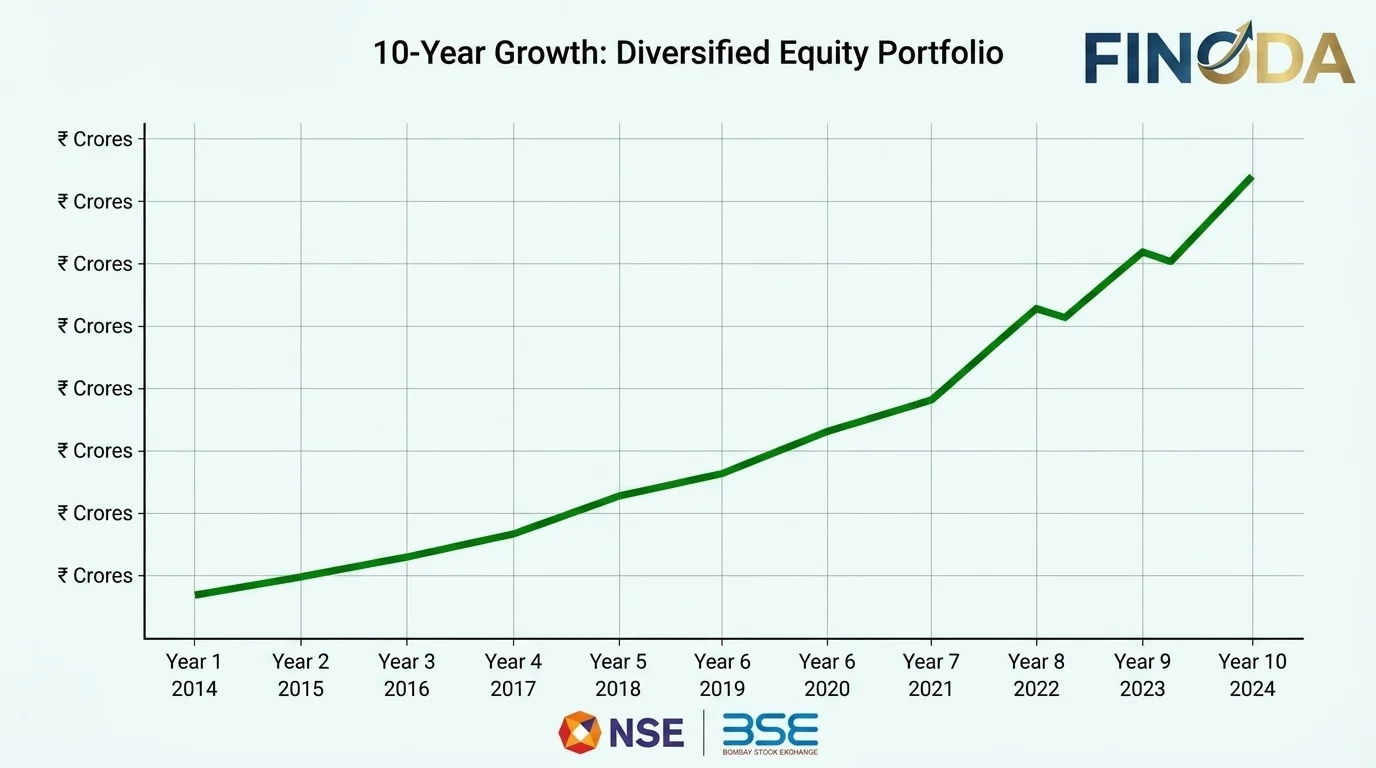
Cash equity is the simplest, most honest way to invest in stocks. You buy shares on NSE or BSE. They land in your demat account. You own them. No borrowed money, no expiry dates, no margin calls at 3 a.m. Just actual ownership of real businesses — and all the wealth that comes with holding on.
In our experience at Finoda, delivery-based investing is where most first-time investors should start. And it's where a lot of experienced investors keep the core of their portfolio. If you want to buy and hold quality stocks — whether that's Reliance, HDFC Bank, Infosys, or something in the mid-cap space — this is how you do it.
What is Cash Equity / Delivery Trading?
So what's the difference between "cash equity" and just... buying stocks? Not much, honestly. The term "cash equity" refers to equity shares that you purchase with actual funds — as opposed to derivatives or margin-based trades. When you buy shares in the delivery segment on NSE or BSE, you pay the full price upfront, and those shares get credited to your demat account.
This is also called delivery trading or CNC trading (Cash and Carry). You're not renting exposure to a stock. You're actually buying it. That distinction matters a lot.
Here's what happens in plain terms. Say you buy 10 shares of Tata Consultancy Services (TCS) today. The trade goes through on NSE. By tomorrow — thanks to India's T+1 settlement cycle — those 10 shares show up in your CDSL or NSDL demat account. The money leaves your bank account, and the shares become yours. You can hold them for a week, a year, or a decade. There's no forced exit.
This is fundamentally different from intraday trading, where you must square off your position the same day. With delivery trading, you set your own timeline.
Who is Cash Equity For?
Delivery trading works well for investors who want to:
- Build long-term wealth through quality Indian companies
- Receive dividends and participate in stock splits and bonuses
- Hold Nifty 50 blue chips without the stress of daily market movements
- Diversify across sectors without taking leverage risk
- Start investing with as little as ₹100 in some stocks
If that sounds like you, you're in the right place.
How T+1 Settlement Works in Cash Equity
India's equity markets moved to T+1 settlement in 2023 — and it changed things considerably for retail investors. Before that, you had to wait two business days (T+2) for your shares to arrive after a purchase. Now, it's just one day. Buy on Monday, shares are yours on Tuesday.
Here's how the process works step by step.
On Trade Day (T): You place a buy order through your broker between 9:15 AM and 3:30 PM. The trade executes on NSE or BSE. Both sides — buyer and seller — commit to the transaction.
On T+1 (Next Business Day): NSE Clearing Limited (NSCCL) or BSE's clearinghouse finalises obligations. They instruct CDSL or NSDL to transfer shares from the seller's demat account to yours. Simultaneously, the funds move from your account to the seller's. By around 3:30 PM on T+1, shares appear in your demat account.
And that's it. Clean. Simple. One day.
What's even more interesting — in 2026, SEBI has expanded T+0 (same-day) settlement to the top 500 stocks by market capitalisation on both NSE and BSE. For eligible stocks, if you trade before 1:30 PM, your shares can arrive the very same day. It's optional — you can still choose T+1 — but it signals where things are going.
A Few Practical Things to Know About Settlement
You can't sell shares you just bought on the same day in the delivery segment. That's an intraday trade and is a separate product. Also, if you buy shares on Friday, settlement happens on the next working Monday — holidays and weekends don't count toward the settlement cycle. And BTST (Buy Today, Sell Tomorrow) is possible, but it does carry some delivery risk, so check with your advisor before trying it.
The NSE and BSE follow identical T+1 rules. So whether your stock is listed on one exchange or both, the timeline is the same. This system — managed by CDSL and NSDL depositories — acts as a strong trust layer. No broker holds your shares. They sit in your own demat account, registered under your name, with your PAN.
For more on how settlement works, you can refer to the NSE Settlement Calendar and SEBI's delivery trading regulations.
Best Stocks for Cash Equity (Long-Term)
We've worked with thousands of investors across Bangalore and beyond. And the most consistent wealth builders? They buy quality, hold patiently, and add regularly. That's not a revolutionary insight — but it's one that's surprisingly hard to put into practice when markets are swinging.
So what kinds of stocks work best in a delivery-based portfolio?
Blue chip stocks on Nifty 50 are the backbone of most well-managed portfolios. These are India's 50 largest, most liquid companies — companies like Reliance Industries, HDFC Bank, ICICI Bank, Wipro, and Bajaj Finance. They've weathered multiple market cycles. They pay dividends. They have institutional ownership. And they're available for purchase right now through NSE and BSE.
But blue chips aren't the only game. Some investors do very well with quality mid-cap stocks in sectors like IT services, pharma, consumer goods, and infrastructure — especially when bought at reasonable valuations during market corrections.
Sectors Worth Watching in 2026
A few sectors that have been attracting consistent delivery-based interest:
Banking & Financial Services: India's credit growth story is far from over. PSU and private banks both offer compelling long-term narratives.
IT Services: Global demand for Indian software talent hasn't cooled. Companies with strong US client bases continue to generate free cash flow.
Consumer Staples: FMCG stocks might not be exciting, but they're steady. Companies like HUL, Nestle India, and Britannia have compounded wealth for decades.
Renewable Energy & Infrastructure: With India's push toward clean energy and massive infrastructure spending, this space is drawing serious long-term capital.
We don't give stock tips — and frankly, you should be wary of anyone who does without knowing your financial situation. But we do help our clients think through sector allocation, risk tolerance, and portfolio concentration as part of equity trading guidance at Finoda.
Cash Equity vs F&O — Which is Better for Beginners?
This is probably the most common question we get from first-time investors. And the honest answer is: if you're just starting out, cash equity wins every time.
Here's why. Futures and Options (F&O) are derivatives — financial contracts that derive their value from an underlying stock or index. You don't own anything. You're betting on price direction within a defined time window. F&O involves leverage, which means your losses can exceed your initial investment. There's also time decay in options — your position loses value just by sitting there, even if the stock doesn't move.
Cash equity, on the other hand, is ownership. If you buy ₹50,000 worth of Nifty 50 stocks today, your maximum loss is ₹50,000. In practice, a diversified portfolio of quality stocks rarely goes to zero. Moreover, you receive dividends, bonus shares, and rights issues along the way.
A Quick Side-by-Side
| Cash Equity (Delivery) | F&O (Derivatives) | |
|---|---|---|
| Ownership | Yes — real shares | No — just a contract |
| Leverage | None | High (can be 5–10x) |
| Time limit | None — hold as long as you want | Fixed expiry (weekly/monthly) |
| Risk | Limited to invested capital | Can exceed invested capital |
| Dividends | Yes | No |
| Ideal for | Long-term wealth building | Short-term speculation (experienced traders) |
That said, F&O isn't evil. Experienced investors use it for hedging, not just speculation. But as a starting point? Delivery trading gives you time to learn markets without the knife-edge pressure of expiring contracts.
If you're curious about derivatives, we'd suggest starting with delivery investing first, building a solid base, and then exploring Derivatives — F&O with proper guidance.
Start Delivery-Based Equity Investing with Finoda
Opening a demat account and starting cash equity investing with Finoda takes about 15 minutes. The process is fully digital. Here's how it works.
Step 1 — Open Your Demat Account: Head to Open Demat Account and fill in your basic details. You'll need your PAN, Aadhaar, and a bank account. Verification is online.
Step 2 — Fund Your Account: Transfer funds from your bank account to your trading account. There's no minimum balance requirement to start — though practically, even ₹5,000 gives you decent options in the delivery segment.
Step 3 — Start Buying Stocks: Once your account is active, you can start placing delivery (CNC) orders on NSE and BSE. Our team is available to guide you on platform usage, order types, and basic portfolio construction.
Step 4 — Hold and Track: Finoda provides ongoing guidance to help you monitor your portfolio. We'll flag important corporate events — dividends, rights issues, bonus announcements — so you never miss something that affects your holdings.
There's no reason to overcomplicate this. The best delivery investors we've worked with didn't start with a complex strategy. They started with one or two quality stocks, held through the noise, and added consistently over time. That's it.
If you want to compare this with long-term investing options like mutual funds or SIP, we cover those separately — and we're happy to help you figure out the right mix.
Why Finoda for Cash Equity?
We're based in Bengaluru and have been helping investors navigate Indian equity markets for over 8 years. In our experience, what investors actually need isn't a fancy platform — it's someone who picks up the phone when things go sideways, explains what T+1 means without jargon, and tells you honestly when a stock pitch is too good to be true.
That's what we do. We operate under SEBI's regulatory guidelines, which means your investments are protected, your demat account is held at CDSL or NSDL (not with us), and we're accountable to proper regulatory oversight.
Our clients range from salaried professionals investing their first ₹5,000 to business owners managing multi-crore equity portfolios. The approach is the same for all of them: understand the goal, build the right portfolio, and don't panic when the market corrects.
Ready to Start?
📞 Call us: 9035294343
📧 Email: info@finoda.in
📍 Visit: VGV Towers, Unit 101, 139/88, 1st Floor, 100 Feet Ring Rd, Jayanagara 9th Block, Bengaluru — 560041
Open Your Free Demat Account →