
IPO Investing India — Apply Online, Track GMP & Allotment Status
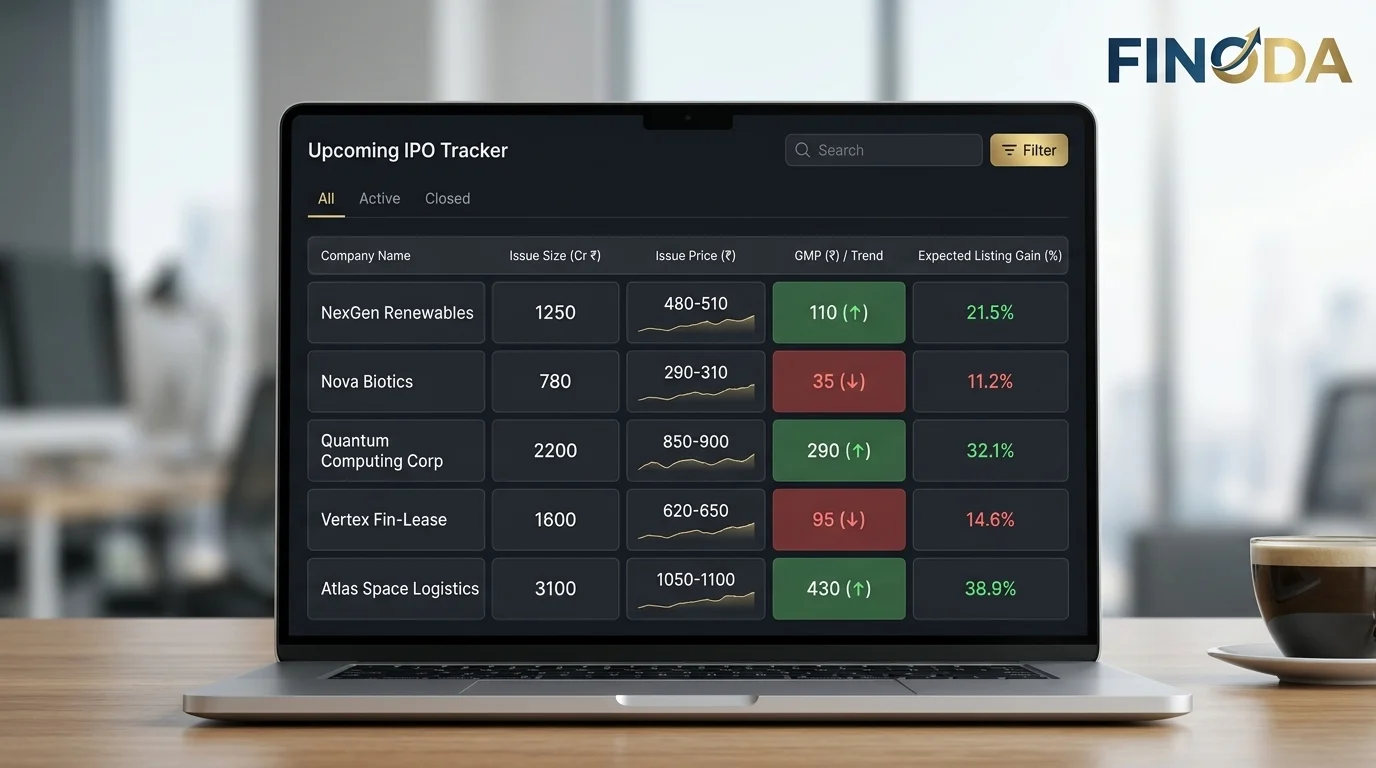
Every year, thousands of Indians miss out on IPO allotments — not because they don't want in, but because they don't know the process or where to start. At Finoda, we've helped over 10,000 investors apply for IPOs the right way — from checking live GMP today to tracking allotment status by PAN number. Whether it's a mainboard IPO or an SME IPO, we guide you through every step. And since our operations follow all SEBI guidelines, you can invest with full confidence.
Open Free Demat Account →Upcoming IPOs in India 2025 — Full List & Analysis
IPO season in India has been busy. In 2024 alone, India saw over 90 mainboard IPOs raise more than ₹1.6 lakh crore — one of the highest in the world. And 2025 is shaping up to be even bigger, with some high-profile names already filing their DRHP with SEBI.
So, which upcoming IPOs are worth watching? That's the question we get asked most often. Honestly, there's no single answer — it depends on your risk appetite, the company's fundamentals, and what the grey market is signalling.
Here's what we look at before recommending any upcoming IPO:
The issue price and price band tells you what the company thinks it's worth. The subscription data (updated daily during the IPO window) tells you what the market thinks. And the GMP — the grey market premium — gives you an unofficial, real-time read on where the stock might list.
We monitor upcoming IPO 2025 listings closely. New IPOs keep getting announced throughout the year — from fintech and EV companies to defence and pharma. Check back here regularly, or contact our team to get alerted before the next big IPO opens.
Want to learn how to read financials before applying? Visit our Stock Market Basics Hub for plain-language guides.
IPO GMP Today — Live Grey Market Premium Tracker
Let's be honest — the first thing most people check before applying for an IPO is the GMP. And for good reason.
The IPO GMP today (grey market premium) is essentially what people are willing to pay for IPO shares before they even list on NSE or BSE. It's unofficial. It runs outside the formal exchange. But it tells a very real story about market sentiment.
For example, if an IPO has a price band of ₹200–₹210 and the current GMP is ₹80, the expected listing price would be around ₹290. That's a 38% gain on paper. But here's what matters — GMP can shift overnight. We've seen IPOs with strong GMP crash on listing day due to broader market conditions.
In our experience, GMP is a useful signal. It's not a guarantee.
What Drives IPO GMP Higher?
Strong subscription numbers push GMP up — especially in the QIB (Qualified Institutional Buyers) category. When big institutions subscribe 50x or 100x, the market reads that as serious demand. Company fundamentals, sector tailwinds, and overall market mood also play a role.
Upcoming IPO GMP — What to Track
For the most accurate IPO GMP live data, check platforms like Chittorgarh, InvestorGain, or IPOWatch alongside our tracker. Cross-referencing two or three sources gives a more reliable picture than relying on just one.
Check real-time grey market premium data at Chittorgarh IPO GMP
IPO Allotment Status Check — By PAN Number
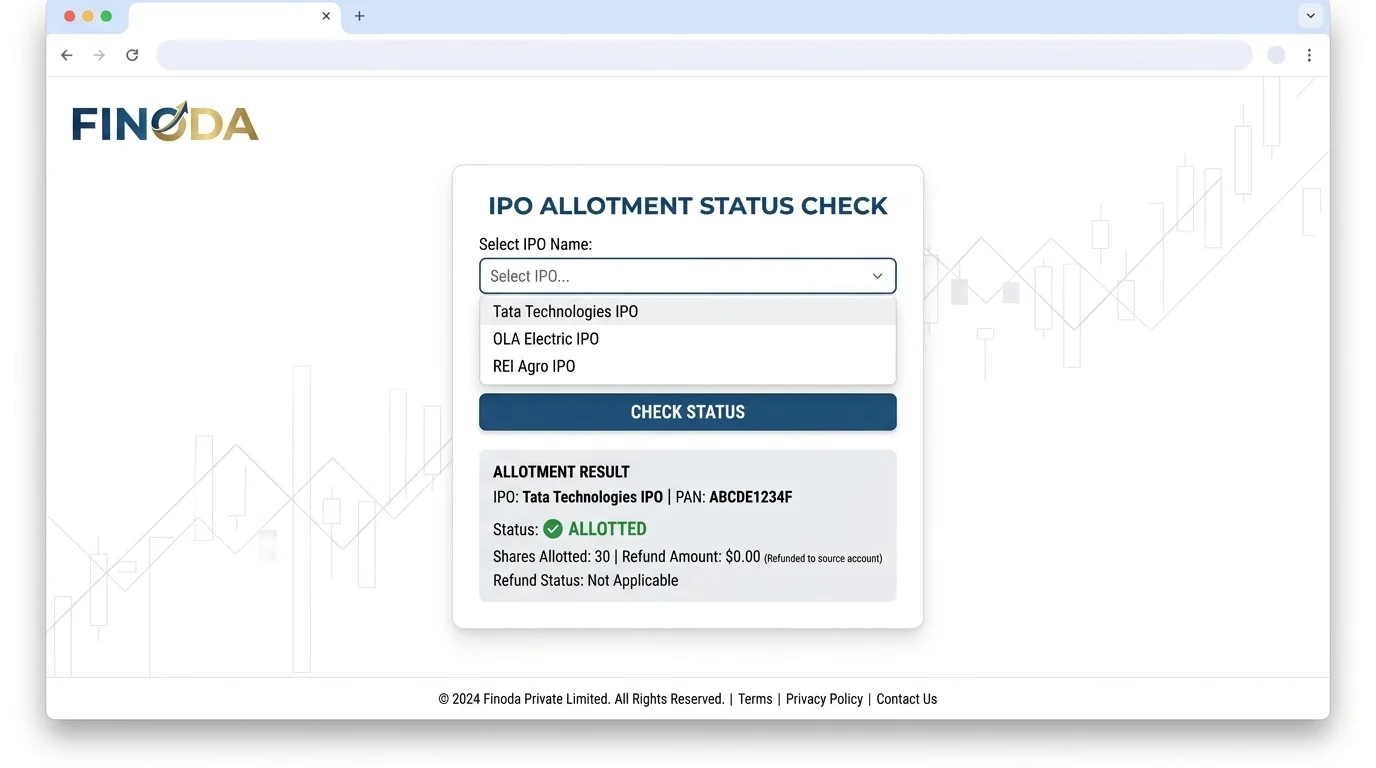
The wait after applying for an IPO is the worst part — we know. You've blocked your funds, submitted your bid, and now you're just waiting to find out if you got allotted.
Here's how to check IPO allotment status online in under a minute:
Via the Registrar's Website (KFintech / Link Intime):
Most IPOs use either KFintech or Link Intime as their registrar. Go directly to their allotment portal, select the IPO name, enter your PAN number, and click Submit.
Via BSE IPO Allotment Portal:
BSE runs its own allotment status check page. You'll need your application number or PAN. Results are usually up within 6 days of the IPO closing date.
Via Finoda:
We notify our clients directly when allotment results are out. No need to keep refreshing multiple portals.
IPO Allotment Status Check Online by PAN Number
The fastest method is using your PAN. Every application is tied to your PAN card — so even if you've lost the application number, your PAN will pull up the result. Go to BSE IPO Allotment Status or KFintech IPO Allotment, select the IPO name, enter PAN, and you'll see the allotment result within seconds.
What Happens If You Don't Get Allotment?
Nothing to worry about. If shares aren't allotted, the blocked amount in your bank account gets released automatically — usually within 4–6 working days. That's the whole point of the ASBA system (more on that below).
Check your allotment status directly at BSE IPO Allotment Portal
What is IPO Grey Market Premium (GMP)?
Here's the plain-English answer that Google's featured snippet box loves.
IPO GMP stands for Grey Market Premium. It's the price at which an IPO's shares trade in the grey market — an unofficial, unregulated market that operates before the company lists on NSE or BSE.
If an IPO's issue price is ₹500 and the GMP is ₹150, people in the grey market are paying ₹650 per share in advance. That tells you the market expects the stock to list at around ₹650 or higher.
But here's the important caveat — the grey market is completely informal. SEBI doesn't regulate it. There's no legal recourse if a deal goes wrong. More importantly, a high GMP doesn't guarantee a high listing price. Market conditions on listing day can — and do — override grey market sentiment.
Grey Market Premium Meaning — A Quick Reference
| Term | Meaning |
|---|---|
| GMP (Grey Market Premium) | Unofficial premium above issue price, traded before listing |
| Kostak Rate | Price at which an entire IPO application is bought/sold in grey market |
| Subject to Sauda | A grey market deal that's conditional on IPO allotment |
| Negative GMP | Market expects the stock to list below issue price |
We always tell our clients: watch the GMP as a sentiment indicator. Don't base your application decision purely on it.
For SEBI's official stance on grey markets, read SEBI Investor Awareness
What is ASBA in IPO Application?
If you've ever wondered why your bank account shows a "hold" amount after applying for an IPO — that's ASBA doing its job.
ASBA stands for Application Supported by Blocked Amount. It's the standard payment method for all IPO applications in India. Here's how it works:
When you apply for an IPO, your bank doesn't actually deduct the money. Instead, it blocks the application amount. The money stays in your account and earns interest (in savings accounts) or returns (in FDs) until allotment is finalised.
If you get allotment, the blocked amount is debited and shares are credited to your demat account. If you don't get allotment, the block is simply lifted. No transfer, no waiting for refunds.
Why ASBA Matters for Every IPO Investor
Before ASBA, investors had to write cheques or transfer funds upfront. Refunds took weeks and sometimes got delayed. ASBA fixed all of that. Today, ASBA is mandatory for all retail IPO applications in India — not just a convenience feature.
You can apply via ASBA through your net banking portal (most major banks support it), through UPI (up to ₹5 lakh per application for retail), or directly through your broker platform like Finoda.
New to investing? Read our Demat Account Guide to understand how your account connects to IPO applications.
How to Apply for IPO Through Finoda — Step by Step
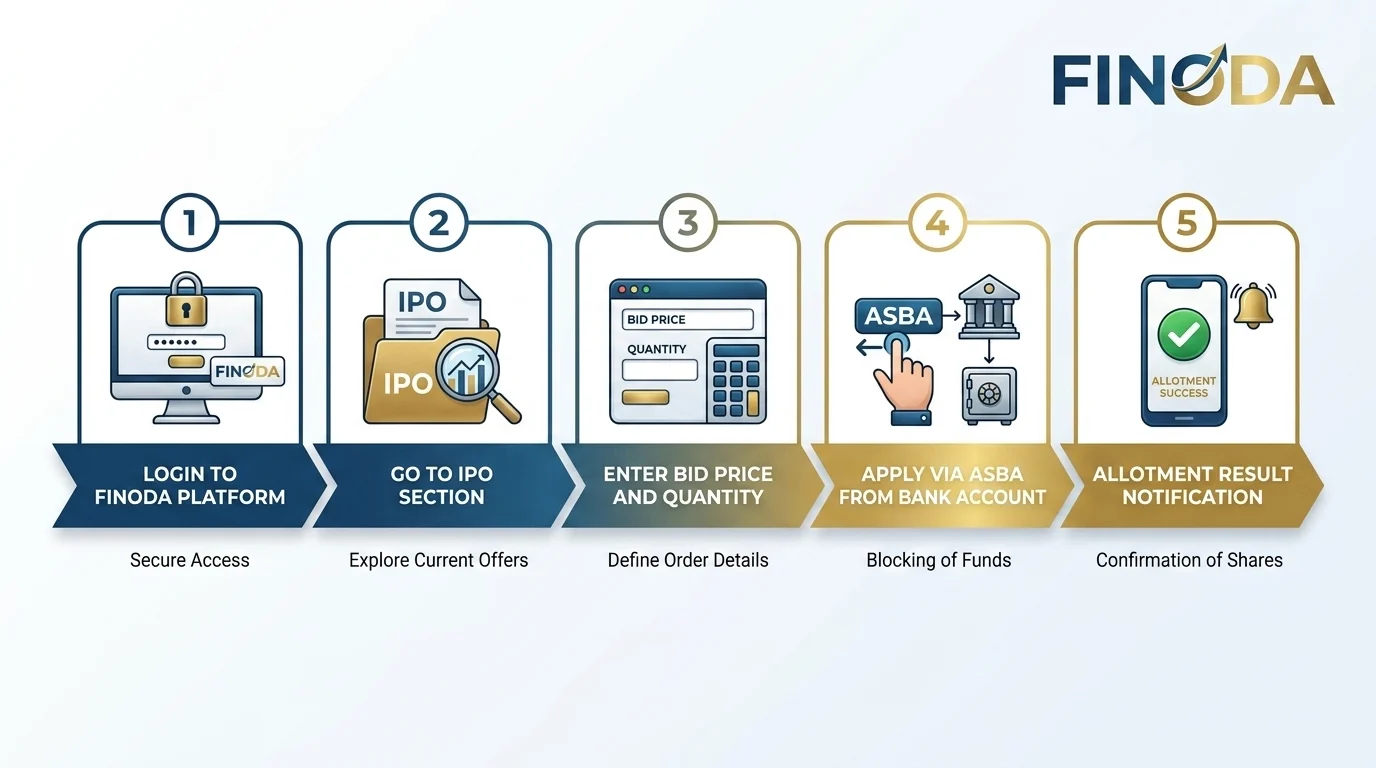
Applying for an IPO with Finoda takes about 5 minutes once your demat account is active. Here's the full process:
Step 1 — Log in to Your Finoda Platform
Open the Finoda trading platform on your browser or app. Go to the IPO section in the main menu. You'll see a list of currently open IPOs with subscription dates, price bands, and lot sizes.
Step 2 — Select the IPO and Enter Bid Details
Click on the IPO you want to apply for. Enter the number of lots you want and the bid price (you can bid at cut-off price, which means you're happy to pay whatever final price is decided). For retail investors, the maximum application is ₹2 lakh.
Step 3 — Enter Your UPI ID or Net Banking Details
For UPI applications, enter your UPI ID. You'll get a mandate notification on your UPI app (Google Pay, PhonePe, BHIM, etc.) to block the funds. Approve it within the given time window.
Step 4 — Funds Get Blocked via ASBA
Once you approve the UPI mandate, the application amount is blocked in your bank account. No money is transferred yet. Your application is now submitted to the exchange.
Step 5 — Check Allotment Status
On allotment day (usually T+6 from IPO close), log in to Finoda or check the registrar's website using your PAN. If allotted, shares appear in your demat account before listing day. If not allotted, the blocked amount is released automatically.
That's it. Five steps. And if anything goes sideways, our team is available to help — contact us here.
Already have a demat account? Explore our Equity Trading services to trade IPO shares post-listing.
SME IPO India — Small Cap Opportunities
Not all IPOs are large-cap, ₹5,000 crore blockbusters. India's SME IPO segment has quietly become one of the most exciting corners of the primary market.
SME IPOs are Initial Public Offerings from small and medium enterprises. They list on BSE SME or NSE Emerge platforms — not the mainboard. And while the issue sizes are smaller (often ₹10–₹100 crore), the listing gains can sometimes outperform mainboard IPOs significantly.
We've seen SME IPOs list at 100–200% above issue price in bull markets. But the flip side is real too — SME stocks are less liquid. Once listed, it can be hard to exit a large position quickly.
What is SME IPO? Key Differences from Mainboard
| Factor | SME IPO | Mainboard IPO |
|---|---|---|
| Listing Platform | BSE SME / NSE Emerge | BSE / NSE |
| Issue Size | ₹10 Cr – ₹25 Cr (typically) | ₹25 Cr and above |
| Lot Size | Larger (₹1–2 lakh per lot usually) | Smaller (₹14,000–₹15,000 per lot) |
| Liquidity | Lower | Higher |
| Due Diligence Required | Higher | Moderate |
If you're interested in SME IPO investing, talk to our advisors first. The opportunities are real — but so are the risks. We'd rather you go in informed.
Explore our Long-term Investing page if you're thinking of holding IPO shares beyond listing day.
Frequently Asked Questions — IPO Investing India
Q1. What is IPO GMP (Grey Market Premium)?
GMP or Grey Market Premium is the unofficial price at which an IPO's shares trade in the grey market before the official listing on NSE or BSE. A positive GMP suggests expected listing gains, though it is not a guarantee. The grey market is unregulated and operates informally before the exchange listing date.
Q2. How to Check IPO Allotment Status Online?
You can check IPO allotment status on the registrar's website — either KFintech or Link Intime — by entering your PAN number and selecting the IPO name. Alternatively, the BSE IPO allotment portal also works. Finoda clients also get direct notifications when results are announced, so you don't need to keep checking manually.
Q3. What is ASBA in IPO Application?
ASBA stands for Application Supported by Blocked Amount. It's the standard IPO payment method in India. Instead of deducting money from your account, the bank blocks the application amount. If you don't get allotment, the block is removed automatically — usually within 4–6 working days.
Q4. How is IPO Allotment Decided?
For retail investors applying up to ₹2 lakh, if an IPO is oversubscribed, the allotment goes through a lottery system. Each eligible applicant gets a chance at exactly 1 lot. Only one application per PAN card is allowed — so having multiple applications from the same PAN results in rejection of all those applications.
Q5. Can I Apply for Multiple IPOs at the Same Time?
Yes. You can apply for several different IPOs simultaneously. The ASBA blocks are separate for each. But remember — you can only submit one application per IPO per PAN card. Applying twice for the same IPO will get both applications rejected.
Q6. What Happens to Money If I Don't Get IPO Allotment?
Nothing is lost. The blocked amount in your bank account gets automatically unblocked within 4–6 working days of allotment. Since ASBA only blocks — not transfers — your money never actually leaves your account during this period.
Q7. What is the Minimum Amount to Apply for an IPO?
The minimum amount is one lot. Lot sizes vary by IPO, but for mainboard IPOs, SEBI has set the minimum application value between ₹10,000 and ₹15,000 for retail investors. The actual amount depends on the company's price band and lot size defined in their DRHP.
Q8. What is Cut-Off Price in IPO Bidding?
Cut-off price means you're willing to buy at whatever final price is decided within the price band. It's the safest and most common choice for retail investors. By bidding at cut-off price, you maximise your chances of a valid application — regardless of where the price settles.
Q9. Can NRIs Apply for IPOs in India?
Yes, NRIs can apply for Indian IPOs. They need an NRE or NRO demat account and must apply through their bank under the ASBA mechanism. However, some IPOs restrict NRI participation — so always read the RHP before applying. Our advisors can help clarify the eligibility for specific IPOs.
Q10. What is the Difference Between Mainboard IPO and SME IPO?
Mainboard IPOs list on BSE and NSE, involve larger companies, and have higher regulatory disclosure requirements. SME IPOs list on BSE SME or NSE Emerge platforms, involve smaller companies with lower minimum issue sizes, and typically have larger lot sizes in absolute rupee terms. SME IPOs can offer higher returns but also carry higher risk and lower liquidity.
Q11. How Many Days Does It Take for Shares to Get Credited After Allotment?
Under the T+6 listing timeline (which SEBI brought in from 2023), allotment is finalised within 6 working days of IPO closure. Shares get credited to your demat account 1 day before the listing date. So if an IPO closes on Monday, you'd typically see shares in your demat by the following Monday or Tuesday.
Q12. Is IPO Investing Risky?
Yes — like any equity investment, IPOs carry risk. Listing gains are never guaranteed. Some IPOs list below issue price on day one. Grey market premium before listing can be misleading. We always recommend reviewing the company's RHP, understanding their business model and financials, and not over-investing in any single IPO. Diversification and informed decision-making matter here. Read our Risk Disclosure page for more.
Q13. What Documents Do I Need to Apply for an IPO?
You need a PAN card, an active demat account, a linked bank account (for ASBA), and a registered mobile number or email for OTP verification. If you already have a Finoda demat account, all this is already in place — you can apply for IPOs directly from your dashboard.
Q14. Can I Sell IPO Shares on Listing Day?
Yes. Once shares are credited to your demat account before listing day, you can sell them the moment trading begins. Many investors do this to book listing-day gains. However, if the stock lists at a loss, you'll also have to decide whether to hold or cut the position — that's a call only you can make based on your investment thesis.
Why Finoda for IPO Investing?
We're a Bangalore-based investment guidance platform with over 8 years in the market and more than 10,000 clients. In our experience, the biggest pain points around IPO investing are: missing the application window, not knowing how to check GMP, and not understanding allotment rules. We've built our IPO services specifically around solving those problems.
Moreover, all our operations follow SEBI guidelines — so your investments are handled with full regulatory compliance and transparency.
Ready to apply for the next IPO? Open your free demat account today, and we'll walk you through the rest.
Apply for IPO Now →