
Intraday Trading India — Same-Day Stock Trading with Expert Guidance | Finoda
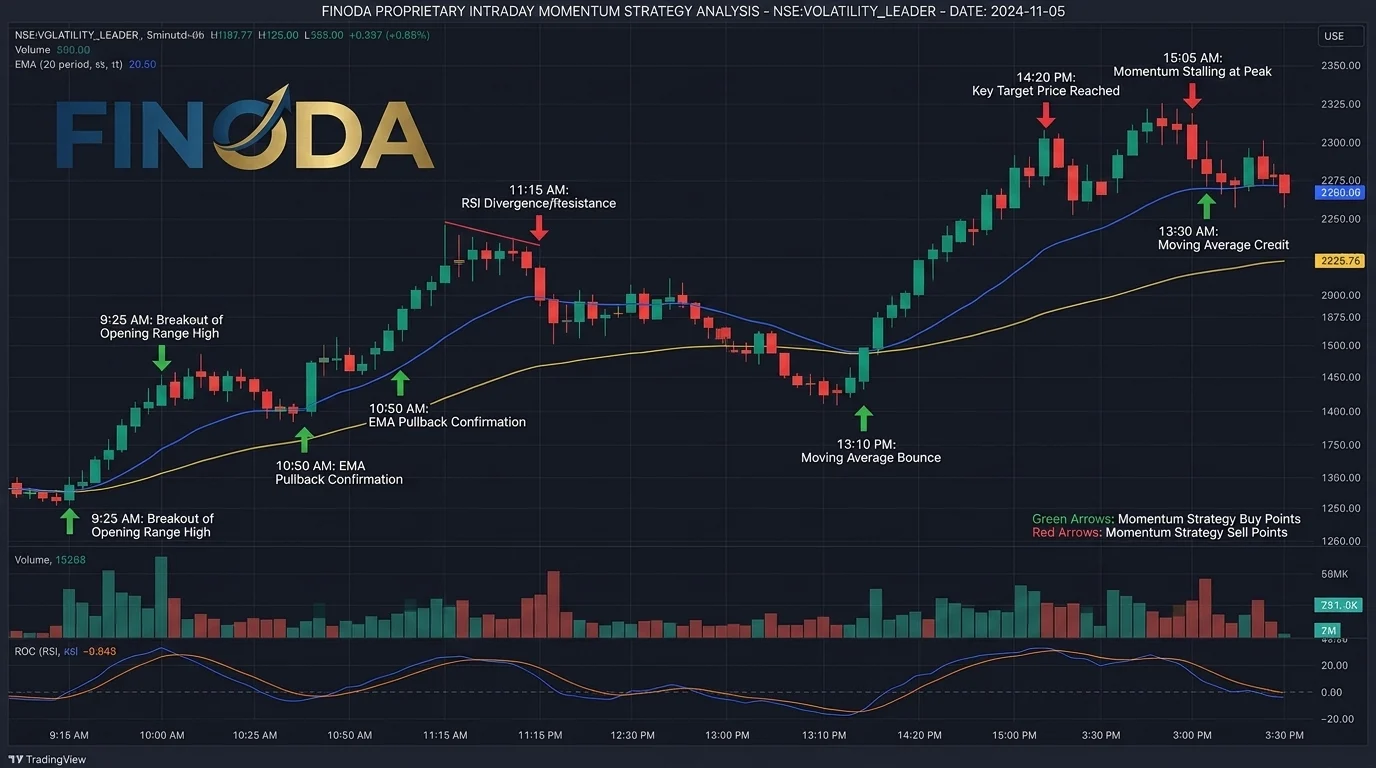
Buying and selling stocks on the same day — that's what intraday trading is. No carry-forward, no overnight positions. Every trade opens and closes before the NSE market shuts at 3:30 PM. It's fast, it demands focus, and when done right, it's one of the most active ways to engage with the Indian stock market. At Finoda, we've worked with hundreds of traders in Bangalore and across India — and we've seen firsthand what separates the ones who last from the ones who don't. Strategy, discipline, and the right guidance. That's what we offer here.
What is Intraday Trading? — Meaning & How It Works
Intraday trading means you buy a stock and sell it on the exact same trading day. If you don't sell before market close, your broker will typically square off your position automatically. There's no overnight holding, no next-day price risk from after-market news. Everything settles the same day.
Here's a simple example. Say you buy 100 shares of Reliance at ₹2,500 at 10:15 AM. By 1:30 PM, the price moves to ₹2,540. You sell. That ₹40 per share — multiplied by 100 shares — gives you ₹4,000 gross profit in under four hours. But the flip side is just as real. If the stock drops to ₹2,460, you still need to exit by 3:15 PM. That's a ₹4,000 loss.
This is why intraday trading isn't casual. It's a skill. And it's learnable — but only with the right foundation.
The product type you'll choose on your trading platform is called MIS (Margin Intraday Square-off). Brokers offering intraday allow you to trade with additional margin, which means you can take larger positions relative to your actual capital. That amplification is a double-edged sword though, and we'll get to that in the risk section.
Intraday trading works well for people who can monitor markets actively between 9:15 AM and 3:15 PM. It suits traders who understand technical charts, volume trends, and price action. If you're looking for a more relaxed approach to wealth building, our Equity Trading and Long-term Investing pages might be a better starting point.
Intraday Trading Strategies for Indian Markets
There's no single "best" intraday strategy. The Indian market has its own rhythm — opening volatility from 9:15 to 10:00 AM, a relatively stable mid-session, and a rush of activity near close. Any strategy worth following accounts for these patterns. In our experience at Finoda, three strategies consistently show up in effective intraday traders' toolkits.
Momentum Trading Strategy
Momentum trading is straightforward in concept. You identify stocks that are moving strongly in one direction — usually backed by high volume — and you ride that wave. If a stock is shooting up with three times its average volume, that's not random. Something is driving it: earnings news, sector rotation, a big institutional buy. You join the move, set a target, and exit before the momentum fades.
The key tools for momentum trading are the RSI (Relative Strength Index), volume bars, and moving averages. On NSE, Nifty 50 stocks like HDFC Bank, Reliance, and Infosys are common momentum candidates because of their deep liquidity. In our team's view, momentum trading is one of the cleanest intraday strategies for beginners who want defined entry and exit rules — as long as you combine it with a stop-loss.
Breakout Trading Strategy
Markets spend a lot of time consolidating — price moves sideways within a range for hours, sometimes days. Then it breaks out. A breakout trader watches these ranges and places trades the moment price crosses a key resistance (in an uptrend) or support (in a downtrend) level with strong volume confirmation.
For Indian markets, breakout strategies work especially well around corporate announcements, FII/DII data releases, and global triggers like US Fed decisions. Bank Nifty is a favourite instrument here — it's volatile, liquid, and reactive to news. However, breakout trading demands patience. False breakouts are common, and entering without volume confirmation is one of the most expensive mistakes a new trader makes.
We've found that combining breakout signals with technical analysis — particularly candlestick patterns like the Marubozu or Engulfing pattern — significantly improves accuracy. If you want to go deeper into this, check out our How to Read Stock Charts guide.
Scalping Strategy
Scalping is the fastest of the three. Scalpers make many small trades — sometimes 10 to 20 in a single session — capturing tiny price movements of ₹1 to ₹5 per share. The profit per trade is small, but it adds up if volume and execution speed are on your side.
This strategy is not for the anxious. It requires quick decision-making, a reliable trading platform, and strict discipline. Scalpers typically focus on extremely liquid stocks where spreads are tight — Nifty 50 constituents being the primary universe. It's also worth noting that scalping generates higher brokerage costs because of the sheer number of trades. So factor that into your net profitability calculation before going down this path.
Not sure how the actual order process works? Watch this quick walkthrough:
Intraday Trading Rules — Timings, Square-Off & Margins
Before you place your first intraday order, there are a few non-negotiable rules you need to know.
Market Hours: NSE and BSE equity markets open at 9:15 AM IST and close at 3:30 PM IST, Monday to Friday (excluding public holidays). The pre-open session runs from 9:00 to 9:15 AM for price discovery.
Square-Off Time: Most brokers — including the platform Finoda clients use — automatically square off open intraday positions at 3:15 PM. Don't wait until the last minute hoping for a reversal. By 3:00 PM, start evaluating your positions. You can always exit manually before auto square-off triggers.
Intraday Margin: Brokers typically offer 3x to 10x leverage on intraday positions, depending on the stock and their internal risk policies. This means with ₹10,000 of capital, you can take positions up to ₹50,000 or more. But leverage cuts both ways — a 5% adverse move on a 5x leveraged position wipes your entire capital. Use it carefully.
Settlement: Intraday trades settle on a T+1 basis. Profits and losses are credited or debited to your account the next working day.
Order Types to Know:
- MIS (Margin Intraday Square-off): The standard intraday order type
- CNC (Cash and Carry): For delivery trades — don't mix these up
- Bracket Order / Cover Order: Pre-defined stop-loss and target, good for disciplined exits
For more detail on regulatory aspects, you can visit NSE India's official website for market timings and trading rules.
Best Stocks for Intraday Trading — How to Select
Stock selection is often where new intraday traders go wrong. They chase tips, random Telegram calls, or "top intraday stocks today" lists without understanding why a stock is on that list. Here's how we look at it.
1. Liquidity first. A stock needs enough daily trading volume for you to enter and exit without slipping. Low-volume stocks look attractive on charts but can be brutal when you're trying to sell 2,000 shares at a specific price. Generally, stick to stocks with at least 5 lakh shares traded daily. Nifty 50 and Nifty Next 50 stocks are a solid starting universe.
2. Volatility — the right kind. You need price movement to make money intraday. Flat stocks are useless. But excessive volatility without direction (think penny stocks) is equally dangerous. Look for stocks with a beta between 1.2 and 2.5 — they move with purpose.
3. Sector momentum. If banking stocks are running on a day of positive RBI commentary, Bank Nifty stocks will generally outperform. Align your stock pick with the broader sectoral trend, not against it.
4. Technical setup. Before market open, scan for stocks near key support or resistance levels, with a clear breakout or breakdown pattern forming. A stock with a textbook setup is far more predictable than one without context.
Popular stocks Indian traders frequently use for intraday:
- Reliance Industries (NSE: RELIANCE)
- HDFC Bank (NSE: HDFCBANK)
- Infosys (NSE: INFY)
- State Bank of India (NSE: SBIN)
- Tata Motors (NSE: TATAMOTORS)
- ICICI Bank (NSE: ICICIBANK)
That said, what works today may not work tomorrow. Market conditions shift. We advise our clients to build a watchlist of 8–12 stocks and rotate based on current momentum rather than trading a fixed list every day.
Intraday Trading Risk Warning — Read Before You Start
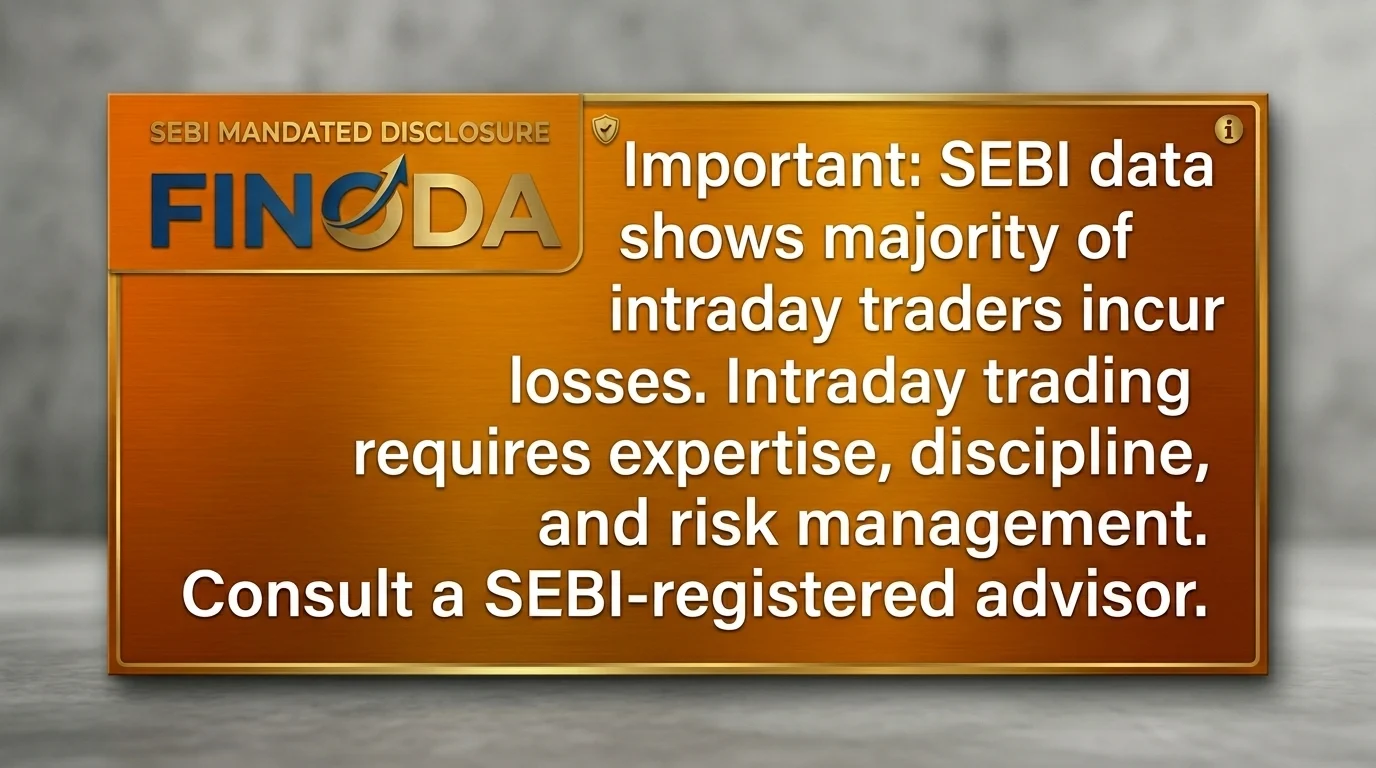
We'll be direct with you. Most retail intraday traders in India lose money. This isn't a scare tactic — it's a fact backed by SEBI's own research data on trader outcomes. The majority of participants who start intraday trading without proper preparation exit the market within a year, often with significant losses.
So why does this happen?
The biggest reason is overconfidence mixed with under-preparation. Many traders enter thinking intraday is a quick-money activity. It isn't. It's a skill that takes months, sometimes years, to develop. And during that learning period, losses are the tuition fee.
Common mistakes that blow up intraday accounts:
- No stop-loss or ignoring stop-loss triggers
- Averaging down on losing positions
- Overtrading — placing too many trades out of boredom or revenge
- Using maximum leverage without understanding position sizing
- Trading based on tips without a personal setup or conviction
- Letting emotions drive decisions — holding a losing trade hoping it'll reverse
This doesn't mean intraday trading is off-limits. It means you need to be honest about your readiness level. If you're new to markets, we'd honestly suggest starting with Equity Trading or even Mutual Funds through SIP before moving to intraday. Build market experience first.
For those ready to proceed, our advisors at Finoda help with trade planning, risk framework setup, and ongoing guidance — so you're not navigating this alone.
Also, all trading on our platform is governed by SEBI guidelines. Before starting, please read our Risk Disclosure document carefully. You can also review SEBI's investor awareness resources for impartial information on market risks.
Start Intraday Trading with Finoda's Expert Guidance
Here's what we've built at Finoda — a place where you get actual guidance, not just a platform and a login. Our advisors don't just hand you a trading terminal and wish you luck. We work with you on strategy selection, stock watchlists, entry/exit frameworks, and ongoing review of your trading performance.
Whether you're a first-time trader trying to understand candlestick charts, or an experienced trader looking to sharpen a specific strategy, we'll meet you where you are. We've served 10,000+ investors across our financial services — and many of them started with intraday trading as their first market exposure.
How to get started with Finoda:
- Open your Demat & Trading Account — We'll guide you through the paperless process. Open Demat Account
- Schedule a strategy session — Talk to one of our advisors about your trading goals, risk appetite, and capital
- Get a personalised watchlist — Curated stocks suited to your strategy and market conditions
- Start with small positions — We always recommend new intraday traders begin conservatively and scale only after consistent results
- Review and refine — We conduct regular portfolio and trade reviews with active clients
If you're also interested in Derivatives & F&O as your intraday approach evolves, we cover that too. And if you want a completely different product for passive income, explore our Fixed Deposit advisory or Mutual Funds pages.
Ready to start? Book a free consultation with our team today.
Call us: 9035294343
Email: info@finoda.in
Office: VGV Towers, Unit 101, 100 Feet Ring Rd, Jayanagara 9th Block, Bengaluru — 560041
FREQUENTLY ASKED QUESTIONS
Intraday trading means buying and selling stocks within the same trading day — all before market close at 3:30 PM. Positions are not held overnight and do not carry forward to the next session. It is considered higher risk than delivery-based trading because of the speed and leverage involved.
NSE and BSE equity trading runs from 9:15 AM to 3:30 PM IST, Monday to Friday. However, intraday positions must typically be squared off before 3:15 PM. The pre-open session starts at 9:00 AM but order execution begins only at 9:15 AM.
It can be — but it isn't for most beginners. SEBI data consistently shows that the majority of retail intraday traders incur net losses. Profitable intraday trading requires strong technical analysis skills, risk management discipline, and significant market experience. Expert advisory and proper training dramatically improve outcomes.
Technically, you can start with as little as ₹5,000–₹10,000. However, we recommend a minimum of ₹25,000–₹50,000 to trade with meaningful position sizes while keeping risk per trade within safe limits (1–2% of capital). Lower capital limits your options and makes proper risk management harder.
MIS stands for Margin Intraday Square-off. It is the order type you select when placing an intraday trade on most Indian trading platforms. MIS orders offer leverage but must be squared off the same day. If you forget, the broker auto-squares off your position near 3:15 PM.
High-liquidity, mid-to-high volatility stocks are generally preferred. Popular choices include Reliance Industries, HDFC Bank, SBI, Infosys, Tata Motors, and ICICI Bank — all Nifty 50 constituents with very high daily volumes. However, best-performing intraday stocks change with market conditions, so a dynamic watchlist reviewed daily is more effective than a fixed list.
Auto square-off is an automatic process where your broker closes all open intraday positions at a pre-defined time — usually 3:15 PM IST — if you haven't done so manually. It prevents intraday positions from accidentally converting to delivery positions. Be aware that auto square-off usually carries an additional charge from the broker.
The three most commonly used and effective strategies are: momentum trading (riding strong directional moves backed by volume), breakout trading (entering when price crosses key resistance/support with confirmation), and scalping (multiple fast trades capturing small price moves). The right strategy depends on your risk appetite, capital, and time available during market hours.
Yes. Intraday trading profits are classified as speculative business income under Indian tax law. They are taxed at your applicable income tax slab rate — not at the 15% STCG rate. Losses from intraday can only be set off against other speculative income, not against salary or business income. We recommend consulting a tax professional — or explore our Income Tax Filing service for proper ITR filing.
In intraday trading, you buy and sell on the same day with no overnight holding. In delivery trading (also called CNC — Cash and Carry), you buy shares that get deposited to your Demat account and can be held for days, months, or years. Delivery trading is lower risk and better suited for wealth creation. Intraday is for short-term price speculation. Learn more on our Equity Trading page.
In India, a Demat account is required even for intraday trading in equities — it's mandatory for regulatory compliance, even though shares aren't actually transferred in intraday trades. For F&O (futures and options) intraday, a trading account alone technically suffices, but both accounts are usually opened together. Open your free Demat Account with Finoda today.
Risk management in intraday trading comes down to three core rules: (1) Always set a stop-loss before entering a trade, (2) Risk no more than 1–2% of your total capital on any single trade, and (3) Keep a risk-to-reward ratio of at least 1:2 — meaning your target profit should be at least double your potential loss. These rules don't guarantee profits, but they prevent catastrophic losses.
Leverage lets you take a trading position larger than your actual capital. For example, with ₹10,000 and 5x leverage, you can buy stocks worth ₹50,000. If those stocks rise 2%, your profit is ₹1,000 on a ₹10,000 base — a 10% return. But a 2% fall means a ₹1,000 loss — also 10% of your capital. Leverage magnifies both gains and losses equally and should be used conservatively, especially by newer traders.
The most widely used indicators among Indian intraday traders are: Volume (confirms price moves), RSI — Relative Strength Index (identifies overbought/oversold conditions), VWAP — Volume Weighted Average Price (benchmark for institutional price levels), Moving Averages (trend direction), and Bollinger Bands (volatility range). Beginners are better off mastering two or three indicators thoroughly rather than using too many at once.