
Loan Against Mutual Funds (LAMF) India — Get Liquidity Without Redeeming
You've worked hard to build your mutual fund portfolio. And sometimes — life doesn't wait. An emergency expense, a business opportunity, or a short-term cash crunch shouldn't force you to break your investments and lose long-term gains. That's exactly why Loan Against Mutual Funds (LAMF) exists.
At Finoda, we help you understand and access this facility — so you keep your SIPs running, your portfolio growing, and still get the cash you need. Fast. Without the paperwork mountain.
Talk to a Finoda Advisor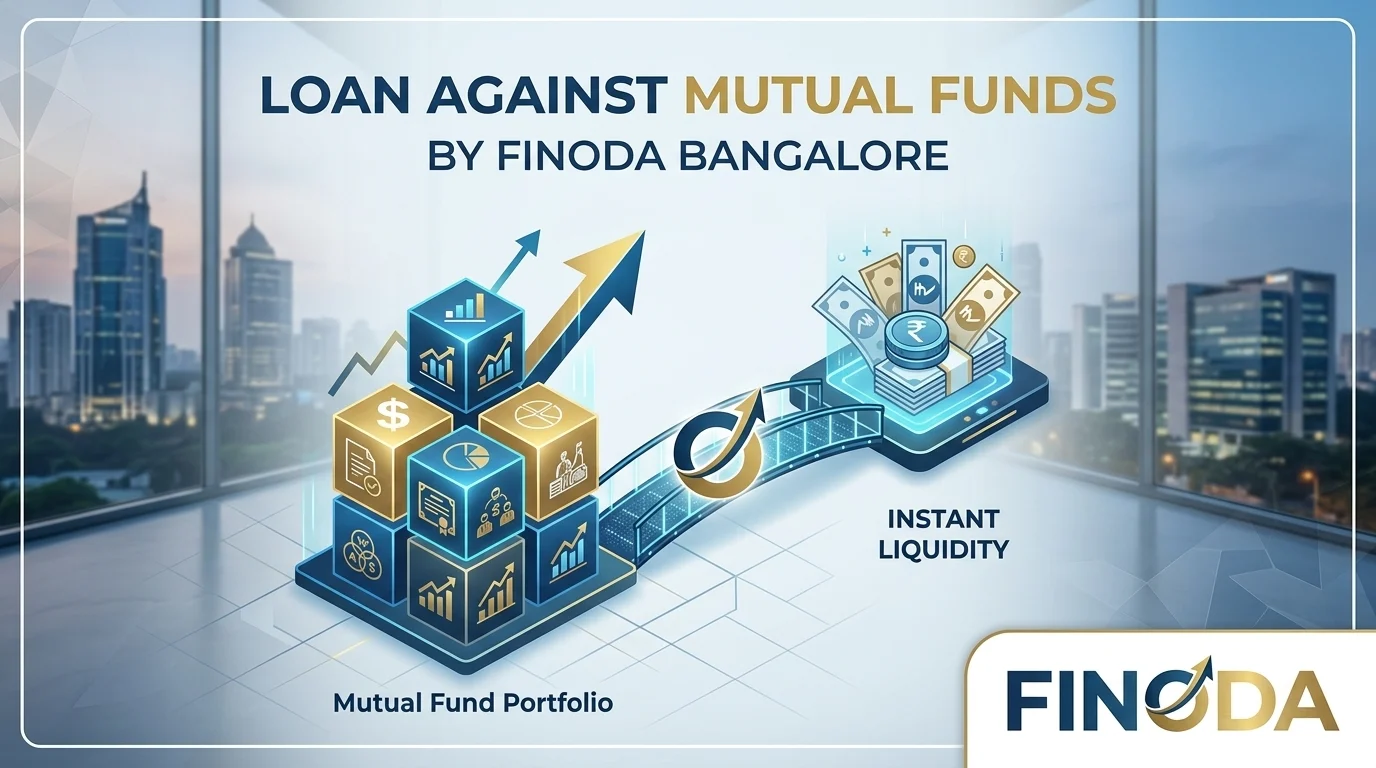
Table of Contents
- What is Loan Against Mutual Funds (LAMF)?
- How to Get a Loan Against Mutual Fund Units — Step by Step
- LAMF Interest Rate vs Personal Loan — The Real Comparison
- Which Mutual Funds Are Eligible for LAMF?
- Why Choose Finoda for LAMF Advisory?
- Common Use Cases — When Does LAMF Make Sense?
- LAMF FAQs — Loan Against Mutual Funds India
- Ready to Get Liquidity Without Selling Your Investments?
What is Loan Against Mutual Funds (LAMF)?
Simply put, LAMF is a loan where your mutual fund units act as collateral. You pledge your holdings — and instead of selling them, you get an overdraft or credit limit against their market value. Your funds keep earning returns. You get the money you need.
We've found that most investors don't even know this option exists until they've already redeemed their funds at a loss. That's a shame, honestly.
Here's the core idea: if you have mutual fund investments worth ₹5 lakh, you can borrow up to 50% (for equity funds) or up to 80% (for debt funds) without actually selling a single unit. SEBI and RBI both regulate this facility — so it's structured, transparent, and your investments stay protected under a properly documented lien process.
The loan is typically structured as an overdraft account. You draw only what you need, pay interest only on what you use, and repay at your own pace within the tenure. Compare that to a personal loan — where you pay interest on the full amount from day one — and the cost difference becomes very clear.
Want to know more about how Mutual Funds work? → Mutual Funds Guide — Finoda
How to Get a Loan Against Mutual Fund Units — Step by Step
The process is mostly digital these days. No need to run to a branch or carry a file of documents. Here's how it generally works:
Step 1: Check Your Eligibility
You need to be between 18 and 70 years of age and have an active PAN card. Salaried professionals, self-employed individuals, HUFs, and even companies can apply. Your mutual fund portfolio should have a minimum value (usually ₹50,000 or more, depending on the lender).
Step 2: Select the Funds to Pledge
Not all funds qualify. Most lenders accept equity and debt mutual funds registered with CAMS or KFintech (earlier Karvy). One important note — ELSS (tax-saving) funds cannot be pledged because they have a mandatory 3-year lock-in period.
Step 3: Submit KYC and Application
Provide your PAN, Aadhaar, and bank account details. The lender fetches your portfolio details digitally via CAMS/KFintech APIs. It's paperless for the most part.
Step 4: Lien Marking on Your Funds
The lender places a lien on your pledged units. Your funds aren't sold — they just can't be redeemed until the loan is cleared. Your NAV-based returns? They continue to accrue.
Step 5: Get the Overdraft Limit Activated
Once verified, the credit limit is activated in your overdraft account. You can withdraw funds as needed. Most lenders disburse within 24–48 hours of application.
Step 6: Repay Flexibly
Pay interest monthly on the amount you've used. Repay the principal whenever you're ready — there are usually no prepayment penalties.
Already have a Demat Account? → Log in or Open Demat Account — Finoda
LAMF Interest Rate vs Personal Loan — The Real Comparison
This is where LAMF genuinely wins. And by a comfortable margin.
SEBI oversees the mutual fund side; RBI governs the lending part. Because the loan is secured against your portfolio, lenders take on less risk. That translates directly into lower interest rates for you.
| Loan Against Mutual Funds (LAMF) | Personal Loan | |
|---|---|---|
| Interest Rate | ~10% – 12% per annum | ~12% – 24% per annum |
| Collateral | Mutual fund units (pledged) | None (unsecured) |
| Processing Time | 24–48 hours (mostly digital) | 2–7 days |
| Interest Charged On | Amount actually used | Full sanctioned amount |
| Prepayment Penalty | Usually nil | Often applies |
| Impact on Investments | Funds stay invested | N/A |
| Tax on Redemption | No capital gains tax (funds aren't sold) | N/A |
So if you take a ₹5 lakh LAMF at 11% versus a personal loan at 18%, you save around ₹35,000 in interest over just one year. That's money that could go right back into your SIP.
Also — and this is something people often miss — you avoid capital gains tax entirely. When you redeem equity funds within 1 year, you pay 20% short-term capital gains tax. By pledging instead of redeeming, you sidestep that tax hit completely.
Explore other loan options → Loan Against Securities — Finoda
Which Mutual Funds Are Eligible for LAMF?
Generally, most open-ended equity and debt mutual funds that are registered with CAMS or KFintech are eligible. Here's a quick breakdown:
Funds That Are Typically Accepted
- Large-cap equity funds
- Mid-cap and flexi-cap equity funds
- Debt mutual funds (liquid, short-term, corporate bond, etc.)
- Hybrid / balanced advantage funds
- Index funds (Nifty 50, Sensex trackers)
- International fund of funds (subject to lender's list)
Funds That Are Usually NOT Accepted
- ELSS / Tax-saver funds — locked in for 3 years, can't be pledged
- Close-ended funds — not redeemable, hence not accepted as collateral
- Sectoral funds — some lenders reject these due to higher volatility risk
- NFOs (New Fund Offers) — generally excluded until they've established a track record
The LTV (Loan-to-Value) ratio differs by fund type. For equity mutual funds, you can typically borrow up to 50% of the NAV (some lenders allow up to 75% as per RBI guidelines). For debt mutual funds, lenders often go up to 80% of NAV, given the lower price volatility.
In our experience, investors with a mix of debt and equity funds in their portfolio can leverage both — which often gives them a higher overall credit limit than they expected.
Check RBI's guidelines on LTV for mutual fund loans → RBI Official Guidelines
Why Choose Finoda for LAMF Advisory?
We're not a direct lender. What we do is help you understand your options clearly — and guide you toward a LAMF structure that actually makes sense for your financial situation. That matters more than you'd think.
We've seen clients come to us after locking in a bad deal just because they picked the first platform they found on Google. Interest rate differences of even 1–2% compound significantly over a 2–3 year tenure.
At Finoda, our team evaluates:
- Which of your funds are eligible (and which aren't)
- What LTV ratio you can realistically access
- Whether LAMF is the right call, or whether a Personal Loan or Home Loan Advisory suits you better
- How to structure repayment to minimize interest outgo
Our operations follow SEBI guidelines. And we bring 8+ years of hands-on experience advising investors across Bangalore and pan-India. With over ₹100 crore in assets under advisory and 10,000+ clients, we're not newcomers to this space.
Book a Free Consultation — FinodaAlso explore: Loans Overview — Finoda
Common Use Cases — When Does LAMF Make Sense?
LAMF isn't a product for everyone in every situation. But when it fits, it fits really well. Here are scenarios where we've recommended it to our clients:
Medical Emergencies — Sudden hospitalisation bills that insurance doesn't fully cover. LAMF is faster than most personal loans and cheaper than credit cards.
Business Cash Flow Gaps — Small business owners or freelancers who hit a temporary working capital crunch. Why sell your long-term investments for a short-term problem?
Education Expenses — College admissions, international education fees, or coaching — large one-time spends that don't justify breaking your portfolio.
Home Renovation or Interiors — A mid-sized expense that needs quick funding. LAMF over a 12–18 month overdraft tenure works cleanly for this.
Bridging Investments — Sometimes an investment opportunity arrives before your next inflow. LAMF gives you a bridge without disrupting what you already have.
See all our loan advisory services → Loans Overview — Finoda
LAMF FAQs — Loan Against Mutual Funds India
1. What is a Loan Against Mutual Funds (LAMF)?
LAMF is a secured loan where you pledge your mutual fund holdings as collateral in exchange for a credit line or overdraft. You don't have to sell your units. Your investments continue to grow while you get access to funds. Interest is charged only on what you actually withdraw, not the full limit.
2. How much loan can I get against my mutual funds?
For equity mutual funds, lenders typically offer up to 50% of the current NAV. For debt mutual funds, the limit is usually 75–80% of NAV. So if you have equity funds worth ₹10 lakh, you could get a loan of up to ₹5 lakh. Final amounts depend on the specific lender and their approved fund list.
3. What is the interest rate on Loan Against Mutual Funds in 2026?
LAMF interest rates currently range from approximately 10% to 12% per annum across banks and NBFCs in India. This is significantly lower than personal loan rates, which go from 12% to 24%. The exact rate depends on your lender, the type of fund pledged, and your credit profile.
4. Can I still earn returns on my pledged mutual fund units?
Yes. Pledging your mutual fund units does not mean you lose ownership or returns. Your NAV-based gains, dividends (if any), and portfolio growth continue. You only cannot redeem or switch the pledged units until the loan is fully repaid.
5. Which mutual funds can be pledged for a LAMF?
Most open-ended equity and debt funds registered with CAMS or KFintech are eligible. ELSS (tax-saving) funds, close-ended funds, and most sectoral funds are generally not accepted. Always confirm the lender's approved fund list before applying.
6. Is LAMF better than a personal loan?
In most cases, yes — if you have eligible mutual fund holdings. LAMF offers lower interest rates, charges interest only on amount used, doesn't require income proof in most cases, and keeps your investments intact. The main trade-off is that your funds are locked (can't be redeemed) until repayment.
7. Can I apply for LAMF online?
Yes. Most banks and NBFCs now offer a fully digital LAMF application process. Funds are typically disbursed within 24 to 48 hours of application and verification. Finoda's advisory team can guide you through the process and help you choose the right lender.
8. What happens if I don't repay a LAMF?
If you default on repayment, the lender has the legal right to liquidate (sell) your pledged mutual fund units to recover the outstanding amount. This is why we always recommend borrowing only what you can confidently repay within the tenure.
9. Do I need a Demat account to get LAMF?
Not always. If your mutual funds are in physical folio form (via CAMS or KFintech), a demat account is not mandatory. However, if your units are held in demat form, the pledging process runs through NSDL or CDSL. Either way, Finoda can guide you through it.
10. What documents are needed for LAMF?
Generally you need: PAN card, Aadhaar card (for address proof), bank account details (for disbursement), and your mutual fund folio details. Most digital platforms auto-fetch your portfolio via CAMS/KFintech using your PAN and mobile number — so actual document submission is minimal.
11. Can I get a LAMF if I have a SIP running?
Yes. Your SIP continues unaffected. Only the units already in your portfolio (at the time of pledging) are lien-marked. New units added via SIP post-pledging can be used to increase your credit limit over time, subject to the lender's process.
12. What is the minimum portfolio value required for LAMF?
Most lenders require a minimum portfolio value of around ₹50,000. Some platforms have a lower threshold of ₹25,000, while others set it higher. Individual lender policies vary, and Finoda can help you identify which lender suits your portfolio size.
13. Is LAMF taxed? Does it count as income?
No. A loan is not taxable income. You don't pay any capital gains tax when you pledge (since no units are sold). However, if the lender is forced to sell your units due to default, capital gains tax would apply on those redemptions — which is another reason to repay on time.
14. What is the typical tenure for a Loan Against Mutual Funds?
Most LAMFs have a 1-year tenure, renewed annually based on your repayment track record and fund value. Some lenders like Bajaj Finance offer tenures from 7 days up to 36 months. The overdraft structure means you can repay the principal anytime without penalty.
15. Can NRIs apply for LAMF in India?
Yes, NRIs holding mutual fund investments in India (in NRO/NRE folios) can apply for LAMF with certain lenders. The process and documentation may differ slightly. Finoda can guide NRI clients through the specific eligibility requirements.
Ready to Get Liquidity Without Selling Your Investments?
Your portfolio took years to build. Don't break it for a short-term need. LAMF is one of the smartest financial tools available to investors in India — and most people simply don't use it because no one explained it clearly.
That's what we're here for. At Finoda, we sit with you, look at your portfolio, and tell you honestly — whether LAMF is the right move, how much you can access, and which lender gives you the best deal for your specific situation.
No jargon. No hidden charges. Just straight financial guidance.